


بسم الله الرحمن الرحيم
Hizb ut Tahrir / Wilayah Sudan: Events and Activities – September 2026
During September 2026, Hizb ut Tahrir / Wilayah Sudan intensified its activities across the country. It dispatched delegations to tribal notables, clan leaders, and community figures, calling upon them to support the Deen (Islam). Reaching out to these leaders, the Hizb urged them to work toward the cause to which Hizb ut Tahrir is dedicated: resuming the Islamic way of life by establishing the second Khilafah (Caliphate) upon the method of the Prophethood. The Hizb called on them to reject being drawn into tribal disputes and manufactured conflicts, while exposing the conspiracies hatched by the colonialist disbelievers against Muslim lands—specifically the "diabolical trinity" targeting Sudan: war, the secession of Darfur, and normalization with the deformed Jewish entity.
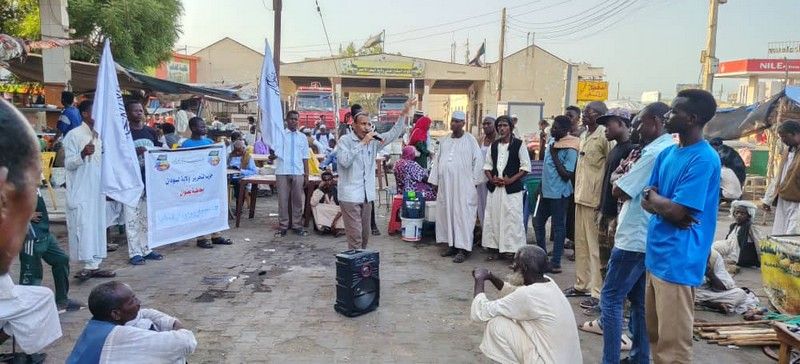
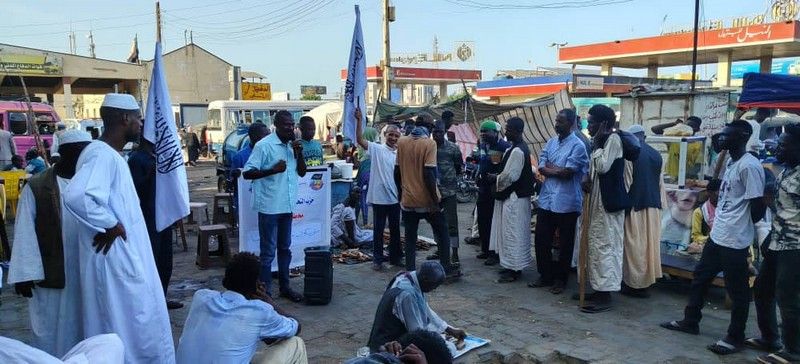
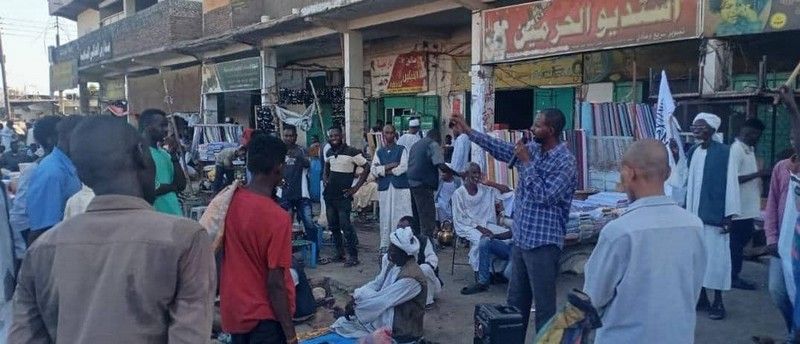
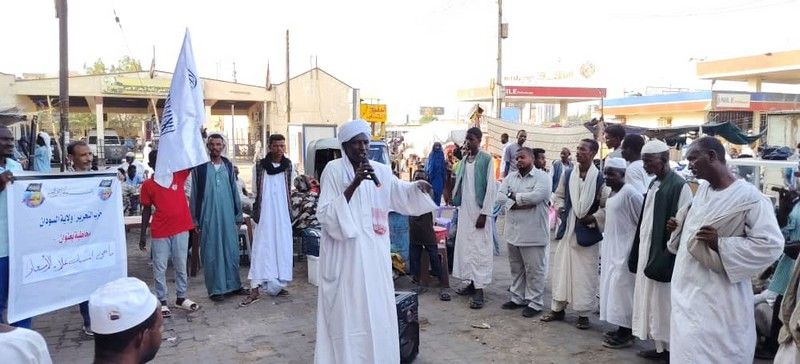
Furthermore, the Party conducted political addresses in markets, public spaces, outside mosques, and along roadways, calling upon the Ummah to work earnestly to establish the Deen and support those striving for this cause. These efforts were complemented by political forums, a monthly political salon, and press conferences held by the Party’s spokesperson. In these forums and conferences, the spokesperson addressed pressing political issues and issued press releases and news updates countering Western conspiracies in Sudan.
Here are some notable activities:
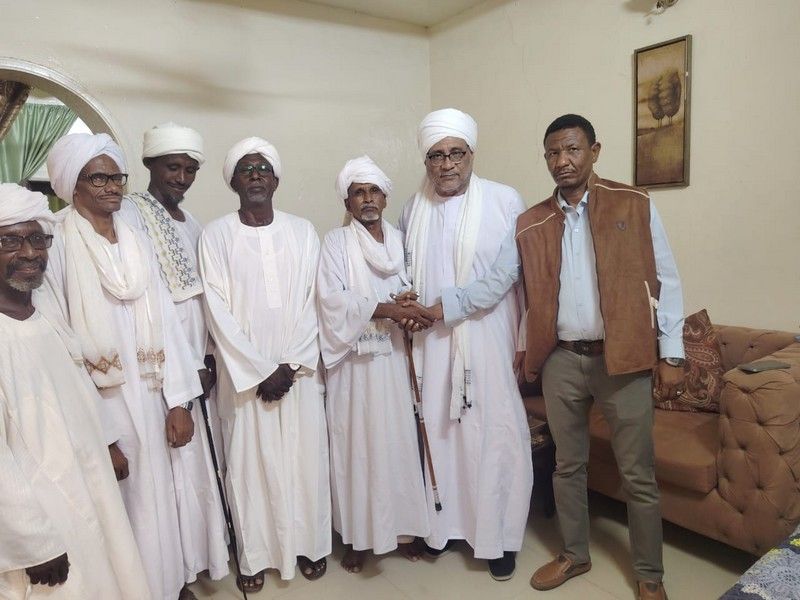
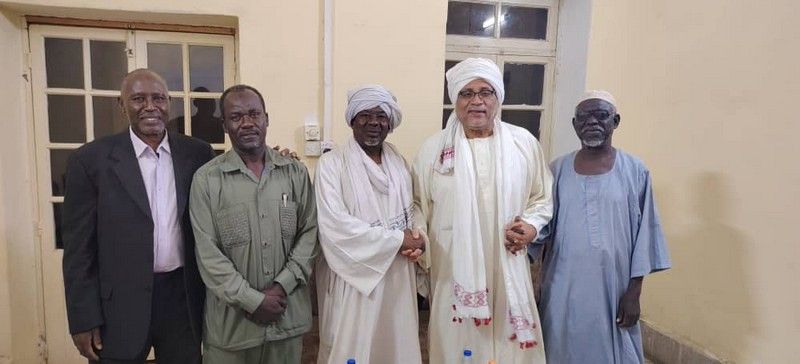
First: Hizb ut Tahrir delegations meeting with leaders in the Sudanese capital and Port Sudan:
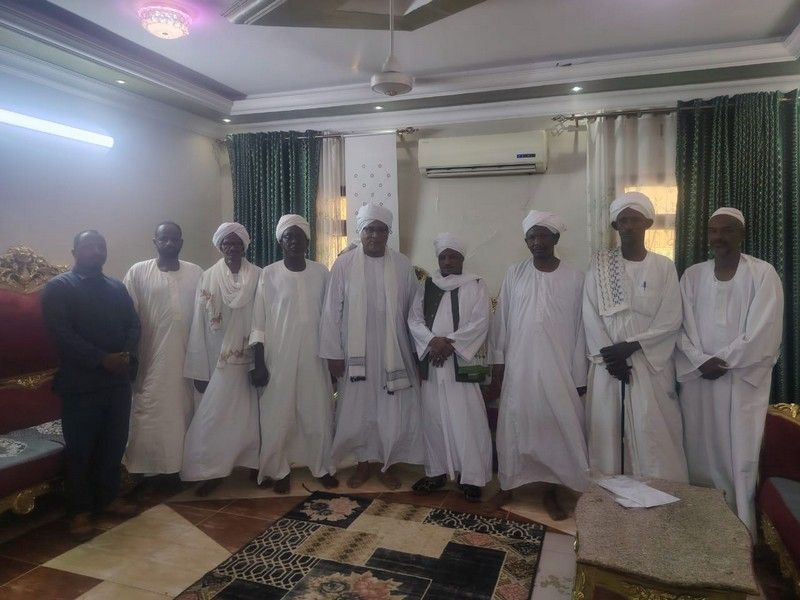
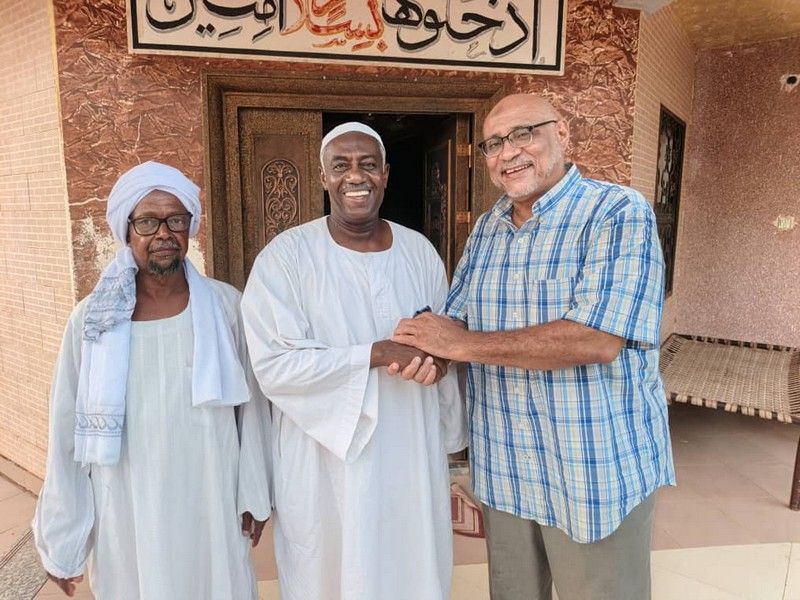
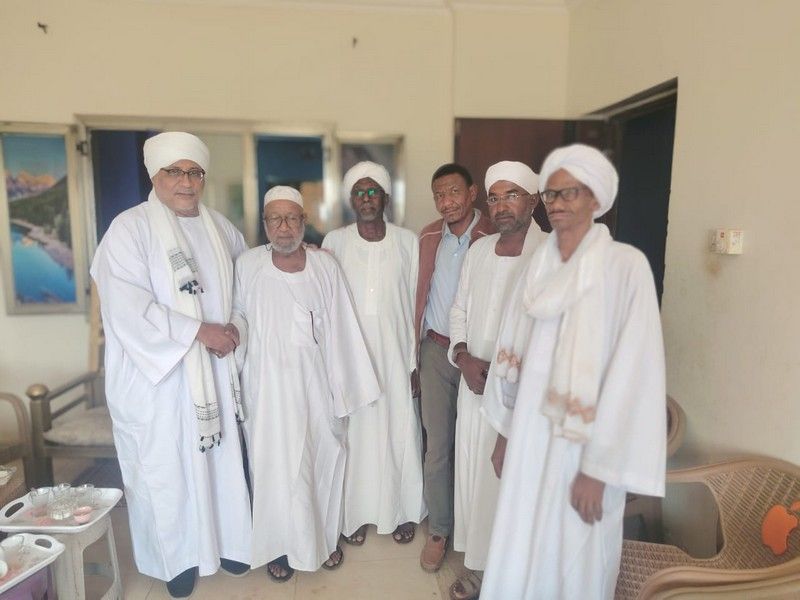
Hizb ut Tahrir delegations met with the following figures: Mr. Makki Muhammad Abd al- Rahman, Secretary of Thought and Foundational Principles for the Rule of Law and Development Party, at his home in Omdurman; the Emir of the Hausa tribe in Red Sea State, Mr. Saleh Abd al-Rahman—accompanied by *Omda* (Chief) Hassan Ayoub and Mr. Mukhtar Hamza; Mr. Abd al-Hayy Safi al-Din Najih, Head of the Dar Hamar Tribal Shura Council, at his residence in the Kubar neighborhood of Khartoum North (Bahri); the Emir of the Kawahla tribe in Khartoum, Mr. Muhammad al-Zain Fadl al-Mawla Abu Hafs, at his home in the Al- Thawra neighborhood of Omdurman; Emir Awad al-Jayyid Muhammad Abd Allah al- Nu’ayma, Emir of the Kawahla tribe, at his home in Al-Saliha, Omdurman; Sheikh Abd al- Rahim Issa—a leader in the Native Administration and the Islamic Movement, and a former Member of Parliament—at his home in Madinat al-Nil, Omdurman; and the Mek (chief) of the Jumuiya tribe, Makk Ghanim al-Tayyib Muhammad Nasir, at his home in Omdurman.
These meetings took place across the cities of the Sudanese capital (Khartoum, Omdurman, and Bahri). During them, Hizb ut Tahrir delegations explained the Hizb's position regarding the American scheme for Sudan—namely, its fragmentation and secularization—and highlighted that the US is advancing this plan at an accelerated pace. They warned these leaders and figures of the dangers inherent in being drawn into the execution of this conspiracy, noting that efforts are underway to separate Darfur through the ongoing war—a conflict ignited by the US and fueled by the arming of tribes and the establishment of militias to keep the situation volatile by stoking racial tensions. They urged the leaders to work towards thwarting it by holding fast to the Islamic Aqeedah (creed) and by having the tribes—with all their men—stand in support of the project for the Khilafah Rashidah (Rightly-Guided Caliphate) based on the method of the Prophethood. This represents the divinely ordained path for implementing Islam, allowing us to preempt the actions of the colonialist disbelievers and block the path of Western agendas in Muslim lands, including Sudan.
The reactions of the emirs, leaders, and tribal chiefs were unanimous: they praised the visits by Hizb ut Tahrir delegations and staunchly defended the unity of Sudan, rejecting any fragmentation. They expressed their support for Muslim unity under the Caliphate and the implementation of Islamic Shariah, agreeing that one should not rely on the colonialist kafir (disbeliever) to solve the country's problems, as that very group is the root cause of those problems. They emphasized the importance of raising the Ummah's awareness regarding the plots of the colonialist West against Muslim lands and countering them through Muslim unity under the Caliphate. They declared their support for a state that unites Muslims—the
Caliphate—a concept that, regrettably, is overlooked by many Islamic groups. Some stated, "As long as you stand with Islam, we stand with you" affirming the need for continued communication and thanking the party for undertaking this Islamic initiative.
Second: Political Addresses:
The political addresses covered a variety of topics, including the Sudanese-Sudanese dialogue (and the US role behind it), the skyrocketing prices of goods and services, the repercussions of the US denying Al-Burhan an entry visa to attend the UN General Assembly, and the rulers' practice of beseeching international kufr organizations—seeking their protection in the hope that they would assist in resolving their countries' problems—among other issues. In a massive public address held in front of the Imam Malik Jurisprudential Society Mosque in Omdurman, Sheikh Abdu spoke about the rising prices—the heat of which is scorching people across the country. He stated that the cause lies in the state- implemented economic measures derived from the capitalist system, such as the collection of forbidden levies, pegging the currency to the dollar, floating the pound, and so on. He noted that these policies are merely the implementation of dictates from the International Monetary Fund (IMF) and the World Bank—dictates that have impoverished the people and exponentially increased their suffering. Similar addresses were also delivered at the Grand Market in Port Sudan.
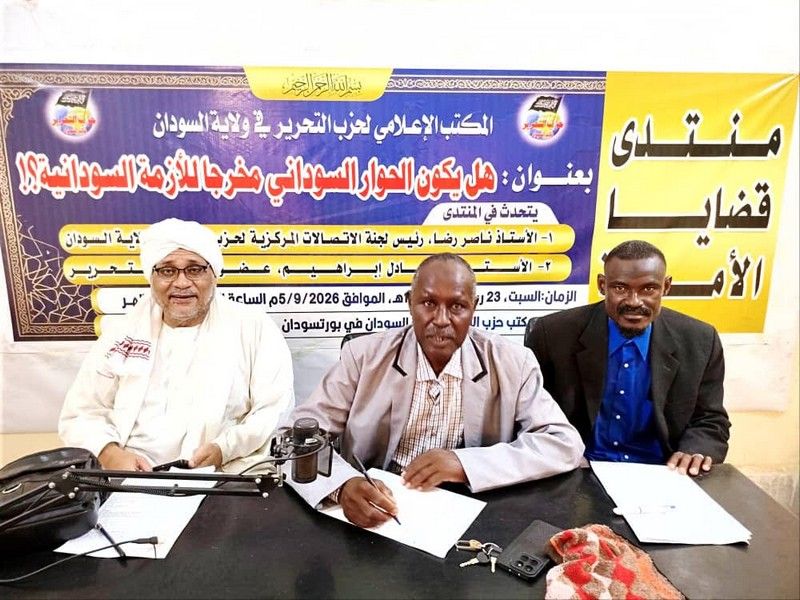
Third: "Issues of the Ummah's Forum: Will the Sudanese Dialogue Provide a Way Out of the Sudanese Crisis?
The monthly Ummah Issues Forum, held at the party’s office in Port Sudan, discussed the history of dialogues held in Sudan—from the 1965 Round Table Conference through the various agreements concluded with armed movements—noting that these initiatives ultimately served only to complicate the political landscape and fragment the country. Ust. Nasser Reda, Head of the Central Communications Committee for Hizb ut Tahrir in the Sudan Wilayah, stated that the call for dialogue initiated by Al-Burhan is backed by the United States; he described it as nothing more than a conspiracy that—aside from lacking a clear framework—would fail to resolve the Sudanese crisis.
In the second presentation, Br. Adel Ibrahim, a member of Hizb ut Tahrir, explained that the system of governance in Islam is the Caliphate based on the method of the Prophethood. He noted that the legitimate method for selecting a ruler is the Bay'ah (pledge of allegiance)—the process through which the Prophet (saw) became head of state and by which the Khulafaa’ ar-Rashideen (Rightly Guided Caliphs) who succeeded him assumed power. He concluded by stating that Hizb ut Tahrir has prepared a draft constitution for the Khilafah (Caliphate) state.
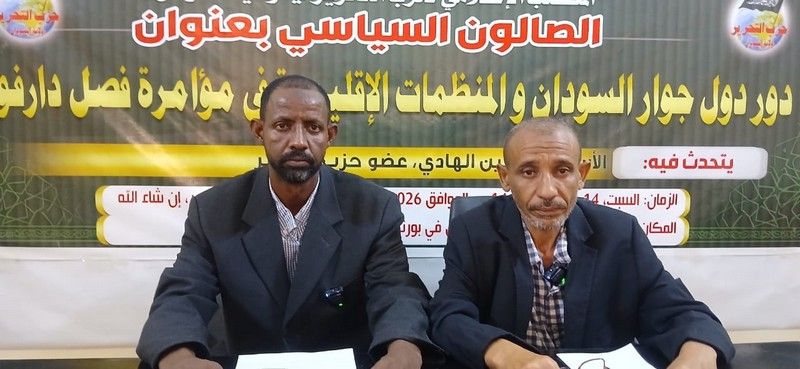
Fourth: The Political Salon – The Role of Sudan’s Neighboring Countries and Regional Organizations in the Conspiracy to Separate Darfur
The Political Salon, organized by the Media Office of Hizb ut Tahrir in the Wilayah of Sudan, hosted Mr. Hussein Al-Hadi—a member of Hizb ut-Tahrir’s Port Sudan office. The speaker explained how America has harnessed Sudan’s neighboring countries to play political and military roles in the conspiracy to separate Darfur. He detailed the political and military actions taken by each neighboring state—including Kenya, Saudi Arabia, Egypt, Chad, Libya, and Ethiopia. He then addressed the role of regional organizations—specifically the African Union, IGAD, and the Arab League—describing them as mouthpieces for America that speak on its behalf and assist it in the scheme to separate Darfur. He concluded by stating that the only solution lies in Islam: through the establishment of the Rightly-Guided Caliphate upon the method of the Prophethood.
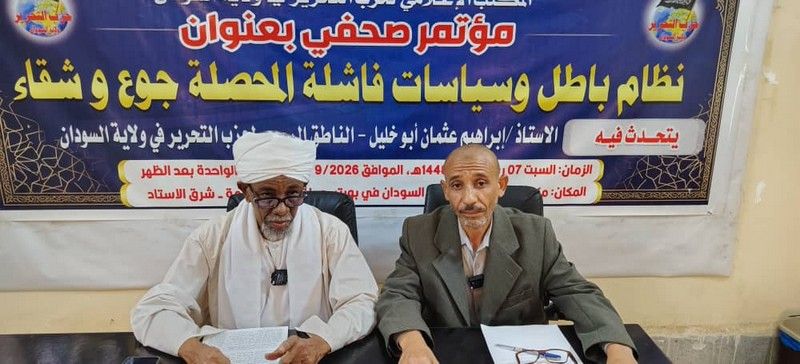
Fifth: Press Conference – An Illegitimate Regime and Failed Policies: The Result is Hunger and Misery
At a time when crises in Sudan are compounding one another... As exorbitant prices plague the markets and the local currency plummets against foreign currencies, the government exacerbates the suffering; it imposes heavy taxes on merchants and others, raises customs duties on imports, and restricts market vendors, turning life into an unbearable hell. In response, the Media Office held a press conference addressed by the Official Spokesperson of Hizb ut-Tahrir in the Wilayah of Sudan, Ustaadh Ibrahim Othman Abu Khalil. He presented a paper titled "An Illegitimate Regime and Failed Policies... The Result: Hunger and Misery" in which he explained the dire economic situation and proposed solutions rooted in Islamic doctrine. He argued that the fundamental solution to the economic crisis in Sudan—and indeed the world—lies in an economic system based on a sound creed. Under such a system, the currency is backed by gold; beyond its security and stability, gold serves as the basis for numerous Islamic rulings, such as blood money (diya), the threshold for the amputation of a thief's hand, Zakat on currency, and others. He called for a complete severance of ties with the International Monetary Fund (IMF), the World Bank, and other usurious institutions, advocating instead for the implementation of Islamic rulings regarding the acquisition, development, and expenditure of wealth. The spokesperson also issued press statements under titles such as "The State in Islam is Neither Civil nor Military, but a Khilafah upon the Method of Prophethood" "There is No Sovereignty for States Created by Colonialism; Sovereignty Exists Only When the State is Founded on Islam" among others. These were in addition to near-daily press updates regarding the activities of Hizb ut Tahrir’s offices in Sudan.
Sixth: Other Activities
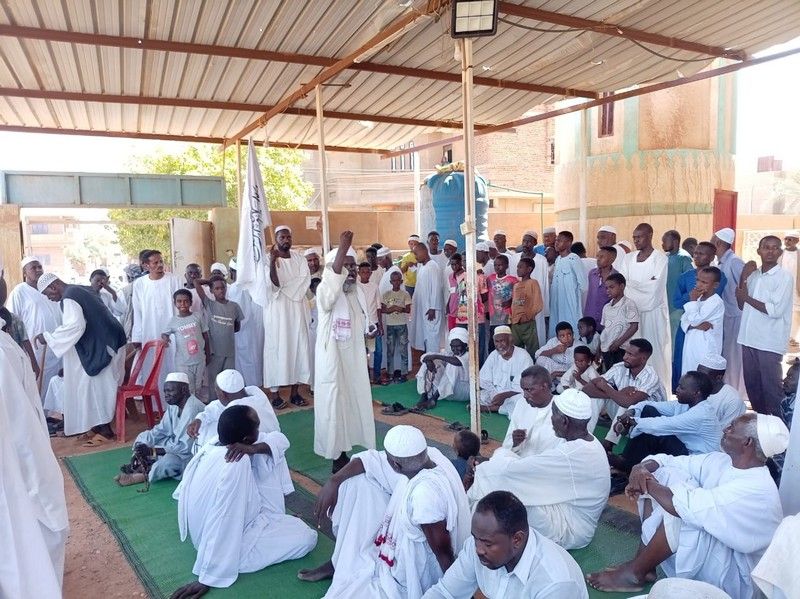
Members of Hizb ut Tahrir in the Wilayah of Sudan conduct lectures in mosques and clubs across various Sudanese cities, in addition to daily talks held after prayers. There are also regular Friday sermon platforms in Khartoum, Omdurman, Port Sudan, Al-Qadarif, Al- Ubayyid, and other cities, where the party’s speakers address the pivotal issue facing the Islamic Ummah.
Delegate of the Central Media Office of Hizb ut Tahrir
in the Wilayah of Sudan
Wednesday, 04 Rabi al-Thani 1448 AH corresponding to 30 September 2026 CE

Click to open image!
-
 Click to open image!
Click to open image!
Click to open image!
-
Click to open image!
Click to open image!
-
Click to open image!
Click to open image!
-
Click to open image!
Click to open image!
-
Click to open image!
Click to open image!
-
Click to open image!
Click to open image!
-
Click to open image!
Click to open image!
-
Click to open image!
Click to open image!
-
Click to open image!
Click to open image!
-
Click to open image!
Click to open image!
-
Click to open image!
Click to open image!
-
Click to open image!
Click to open image!
-
Click to open image!
Click to open image!
https://hizb-ut-tahrir.info/en/index.php/dawah/sudan/30475.html#sigProId025f1086c4
More Details, Visit Websites of Hizb ut Tahrir / Wilayah Sudan
Official site: Hizb ut Tahrir / Wilayah Sudan
Facebook: Hizb ut Tahrir / Wilayah Sudan
Youtube: Hizb ut Tahrir / Wilayah Sudan